Tuesday, October 13, 2020

A few tips for living in small spaces


1. Use Space Inventively 


One of the most significant privileged insights to proficient living is attempting to utilize spaces in your home for different purposes. Make a rundown of your most basic day by day errands and sort out how you can set up your space so each segment of your home can be utilized for more than one movement. Utilize a space as a home office during the day and after hours make it into a grubzone or hangout space.


2. Embellish Deliberately 


Uncovered dividers and an absence of adornments don't really cause a little home to feel greater — it just looks exposed. Use the extra's like throws, mirrors and pictures Vo says that extras can set the temperament, particularly pictures on the dividers and mirrors. 


3. Don't be scared of different Tones


While many of us avoid shading in little spaces since it can make a room look littler, when done right, the inverse can really be valid. Think about utilizing an impartial palette's with certain more brilliant central focuses, which can cause your home to appear to be larger.


4. Give the Light Access 


At the point when your home has a lot of regular sunlight, it might look and feel greater. The equivalent can be genuine when you can see a pretty view, for example, trees or a lake, from the lounge chair or kitchen table.


5. Clean up — And then Clean up Some More 


Jumble occupies valuable room, however it causes the space that you do need to feel littler. Discover an association framework that works for you, and set things aside when you are not utilizing them. 

While these options can assist in benefiting from your space, the correct method to cause a spot to feel like home is to let your own character and style carry through. Try not to let yourself feel kept down by the smaller space.

Saturday, August 15, 2020

Aspiring entrepreneurs listen up


How Entrepreneurs Thrive in Uncertain Times

At the beginning of 2020, entrepreneurship probably felt like big risk for those who dreamed of owning their own business. Now, after months of a global pandemic, those same people may feel becoming an entrepreneur is downright impossible. Surprisingly, this line of thinking is simply not true; in fact, this may be a better time to start a business than even before the pandemic — especially if you have a system to follow and the right team to support you.

Big economic downturns have historically caused a growth in entrepreneurship, and it is often those very businesses that end up driving the new economy. It is also never too late to strike out on your own — studies out of Duke University, Northwestern, and other institutions have found that 40 years old is the average age for those who start their first business — and, surprisingly, these uncertain times might be one of the best times for you to follow that instinct.

Economic downturns have historically caused a growth in entrepreneurship.

Entrepreneurship in Changing Economies

The highest earners in this country are entrepreneurs. Owning a business of your own is practically the only way to reach an unlimited income. All you need is an idea and something people want and you can weather even the worst economic times.

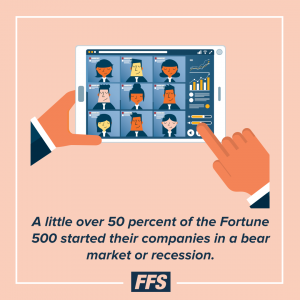
In fact, history shows that entrepreneurship thrives during recessions. In 2009, the Kaufman Foundation found that a little over 50 percent of the Fortune 500 started their companies in a bear market or recession — the most recent being the housing crisis of 2008, when many who faced unemployment found success starting the tech companies found on almost every phone today, including Uber and Instagram.

This could be because entrepreneurship allows people to be flexible in times of crisis and gives them room to pivot as consumer demands change. Think of the rise of Zoom: as offices close and working from home becomes the new normal, teleconferencing software has seen a huge spike in demand, and its owners have benefited. Etsy has also seen record sales during the pandemic, proving that creativity and perseverance can overcome tougher times.

Life insurance has also remained in demand in 2020. For many, the global pandemic has highlighted the need for financial security and the peace of mind that comes from understanding the policies that protect their families. Seizing this opportunity is easier than one might think, especially with a broker like First Financial Security that makes entrepreneurship achievable.

Over 50% of the fortune 500 started in a bear market.

Own a Business Without the Burden

One of the hardest parts of starting a business is building your momentum: there are unforeseen costs on your path to independence, and entrepreneurship involves a steep learning curve. You have to learn how to build a team to help you administer your service, how to market your business to reach your audience of consumers, and how to maintain the type of technology that will make your business accessible in a digital world.

Our mission is to help people achieve the freedoms of owning a business while easing the burdens experienced in the beginning. FFS allows people from communities not usually represented in the insurance industry to learn along the way without the fear of failure.

As 2020 has progressed, we have seen a change in what consumers need and what types of industries will likely endure. People will always need financial security and peace of mind, and uncertain times will always need entrepreneurs to build the economy of the future. Do not let this year discourage you — with the right tools and a proven system, you will find that entrepreneurship holds no limit to your success.

Tuesday, July 21, 2020

Happy Grilling- From my backyard to yours


Shown above are pork chops (L) and NY strip steaks. 

What's your favorite marinade for summertime grilling? I think that my top 5 marinades are-
  1. Teriyaki sauce particularly for beef (as seen above)
  2. A good Robusto Italian salad dressing (generic store brand works as well as the national brands offering a great tang and body 
  3. In the dry rub category, I tend to go for a garlic salt and black pepper mixture
  4. Honey garlic soy sauce 
  5. Multi mix dry rub - Garlic powder, smoked paprika, dry ground mustard, brown sugar, onion powder, black pepper
Just few final thoughts on grilling safety-
  1. Use common sense-  grill outside and a safe distance away from structures
  2. Don't be a dirt ball- Clean your grill. It will prevent flare ups and the food will taste better
  3. Monitor the grill- I have found that if I prepare in advance for the grill including supplies, food and utensils  I don't have to leave the grill unattended. It only takes a second for things to get out of hand. As always think Safety First!!

Sunday, June 14, 2020

Debt management ideas during a crisis

How to Prioritize Your Debt in a Crisis

Unfortunately, payments and bills are still due even if you’ve experienced financial hardship in the wake of COVID-19. Debt management looks a little different during a crisis, but the essentials are still there — avoid late payments, put down as much as you can afford, and focus on certain debts over others.

Crisis situations are the ultimate times to re-evaluate your “needs” and “wants.” You have to ask one question about new purchases and ongoing expenses right now: “Can I live without this?” Everyone’s answers are unique. Maybe you can do away with your streaming services if you can’t afford living expenses — there is always free streaming content, jigsaw puzzles, and books that can entertain you and your family while you’re getting back on your feet. It’s possible, though, that Disney+ is keeping you sane with children at home, or your wellness app is keeping you centered. Your well being and saving your credit score for the future are your top priorities in a crisis. In this post, we’re offering a guide for what to pay first and what you can do for relief.

Your most important goal is having a safe place to live.

Mortgage & Rent

Housing expenses should be your highest priority payments. Your most important goal is having a safe place to live and keeping a home in which to shelter. While many states have put eviction freezes in place, you’re not completely off the hook. Failing to pay rent or mortgage can still result in eventual foreclosure or eviction; the freeze only makes it so you can’t be evicted right away. You may end up having to pay all of the back-logged rent at once when this is over. Keep up with your payments if possible and work with your landlord or mortgage lender to come to a deal that won’t leave you stacked with late payments when the freezes are lifted.

Household Utilities

Stay up to date with your water, sewer, electric, and gas. You don’t want to accrue fees that might bar you from energy assistance programs or shut off your utilities entirely, making it that much harder to stay healthy at home. If you’re having trouble making payments, reach out to your utility providers — many have hardship assistance programs and deferred-bill options.

Car Payments

Your car payments should remain your highest priority after your home expenses. You’ll want to avoid a repossession at all costs — you need that car for essential errands and getting to work when life returns to normal. Luckily, most major auto brands are offering payment deferrals and waiving late fees. Contact your lender to discuss how you can keep your account in good standing. While it may be tempting to cancel auto insurance, doing so can raise your rates later and leaves you open to serious expenses if your car suffers storm damage or is stolen while parked. If you don’t own your car outright, cancelling insurance isn’t an option. Many auto insurance companies are offering refunds on premiums paid during COVID-19. You should be able to work with your insurance company to reduce your rates during this time.

Federally held student loans will stop accruing interest until at least Sept. 30, 2020.

Credit Cards & Other Debts

Your other debts shouldn’t have such a direct impact on your health and safety, and therefore can be renegotiated right now — medical bill and back taxes for example.

Thankfully, the government has mandated that all federally held student loans will stop accruing interest until at least September 30, 2020. You do not need to do anything to take advantage of the 0% interest. Do not pay anyone who offers to reduce your federal student loan interest rates for a fee. The 0% interest does not, however, apply to private student loans – negotiate with your loan officer for support.

As for credit cards, most major banks are letting their borrowers defer for now. Many are also refunding certain fees and altering minimum payments. For reference, there is a list of relief-options offered by different card carriers. You’ll have to call your specific lender to take advantage of these provisions, however. Ask them directly what they can offer in terms of deferment and other measures of assistance.

Stay on Track

Remember that ignoring your debt is never a good idea. If you can’t cover a bill, confront it — contact the lender or creditor and let them know the crisis has made it so you can’t make a payment. They’ll likely be willing and ready to make an arrangement with you due to the unprecedented nature of this crisis. You have options. Take a deep breath — with planning, you can prioritize your debts and keep your credit under control.

Thursday, April 16, 2020

Dangers of Identity Theft during COVID- 9

The Five Most Common Questions About Identity Theft

Here’s everything you need to know in five common questions:

Why would somebody steal my identity?

People live a good portion of their lives online now, and thieves have adapted accordingly. These criminals can now find identifying information online like your credit card or your Social Security Number and use them to make fraudulent purchases, apply for credit cards and loans, or even file taxes without any consequences to their credit record or financial history. This information is found and sold on the dark web, a criminal sector of the internet where thieves are almost impossible to catch. There is a new victim every two seconds—without a clear path to justice, the most important thing for you to focus on is prevention.

What are the consequences of identity theft?

There are many types of identity theft, each with slightly different consequences. The most common type of identity theft is strictly financial, where thieves use your credit line to buy things on your credit card. This can badly damage your credit score and make financial recovery a big headache. Other types of identity theft include medical (using your information to get false medical coverage and prescriptions), criminal (impersonating you when speaking with police), and concealment (using your information to hide from creditors).

Who is at risk for identity theft?

Everyone with a Social Security number can have their identity stolen, but the two demographics that are particularly vulnerable are children and seniors. Identity thieves will try to steal children’s identities to establish a “clean slate” identity, because kids don’t have a financial history yet. It’s important to pay attention to your children’s credit reports so you can catch suspicious activity early.
Criminals also target seniors because people are more trusting as they get older. These scams are usually over the telephone or through internet phishing. Remind your elders to be careful answering calls and emails from people they don’t know.

How do I avoid getting my identity stolen?

When it comes to identity theft, prevention is the most important thing. There are many measures you can take to keep your information safe, such as enabling two-factor identification on your online accounts, using strong passwords and secure web pages, shredding documents, and ignoring strange emails from people you don’t know. For detailed information on how to prevent identity theft, read more here

Friday, March 27, 2020


With market volatility and growing concerns about the COVID-19 pandemic, people aren’t just hoarding toilet paper and hand sanitizer, they are also buying life insurance in record numbers. The need for life insurance has suddenly become clear to Americans and the insurance industry is here to help. Here are a few updates on the insurance industry during this economic climate.

1. Covid-19 Stressing Insurance Industry

Market volatility combined with the prospect of rising death claims puts pressure on insurance companies. While some are turning to new insurers that offer online-only applications, point and click solutions may not be the best solution for your family. Make sure that the company has a track record of stability and has been able to weather storms in the past.

2. Trust is Crucial with your Insurer and your Agent

It’s more important than ever to evaluate an insurance carrier and make sure they have a track record of paying their claims. Fitch is developing a rating system to assess the resilience of insurers to this pandemic. At FFS, we vet our insurance carriers not only for their service to our agents and timeliness in processing applications, but for their claims records and their Comdex ratings as well. Many of our insurers have been in business for over 100 years and they aren’t going anywhere.

3. Virtual Applications

While new online-only insurance platforms have become increasingly popular, they aren’t the only virtual option in the age of social distancing. While those solutions are simple, they offer limited options and can’t guide you to the best products to secure your family, your wealth and your future goals. With shelter-in-place orders increasing around the US, insurers have put new guidelines in place to enable virtual applications, offering clients the possibility of securing a policy even as they shelter at home. Our agents can walk you through the process of getting the best policy for your situation at this time

Wednesday, March 18, 2020

Credit Score Tips

What is My Credit Score and How Do I Improve It? 
Everybody has a credit score, but many people still don’t understand exactly what it is and how it affects them, especially if they were never taught about managing finances growing up. Through our LiSA Initiative, the following Focus on YOUR Money webinar*  tips will show you how to improve your credit score, as well as how it is calculated. 
Simply put, credit is a way to gauge a person’s trustworthiness with regard to paying back the money that they borrow. If your friend asked you for $150 to pay for a new pair of shoes, you may ask yourself: how likely is it that he’ll pay me back? You might look to how much money he owes and how timely he has been at paying those loans back in the past. This is very similar to the risk assessment that credit card and mortgage companies do on you in the form of credit reports and credit scores. 
Some financial advice columnists have recently become adamant about paying cash for everything, even your car, and your home. We don’t adhere to that philosophy; after all, if you’re using cash for everything, you’re not impacting your credit at all, and there are ways you can improve your score with every purchase you make. If done correctly, using credit can be a very positive and powerful thing. 
The Difference Between Your Credit Report and Credit Score 
Though related, your credit report and your credit score are actually two separate things. A credit report is a document that tells the history of your financial life. There are three major credit bureaus that collect your personal information (name, address, social security number) and financial data (loans, collections, bankruptcies, and number of accounts) and compile it all into your credit report. 
The activity on your credit report is then used to derive your credit score, which is a number—usually between 300 and 850—that acts as a sort of “grade” that represents your creditworthiness. The higher your score, the lower the credit risk is to potential lenders, and vice versa. 
You’re entitled to a free credit report every year through AnnualCreditReport.com. Take advantage of this by making sure you check your score every year. An easy way to remember to check your score might be to always do it during your birthday month. You can also have a service like Credit Karma check your credit score multiple times a year and report it back to you. Regardless of how you check your score, it’s important that you do so. You have to know your numbers to change your numbers, after all. 
Credit report v. credit history 
How is Your Credit Score Calculated? 
Your credit score is made up of five aspects of your finances in the following proportions: 
Payment History – 35% 
The largest portion of your credit score is based on how timely you are in making payments on your loans. Late payments can stay on your credit report for up to 7 years, so the most important action you can take to keep up your score is to always pay on time. 
Credit Usage – 30% 
Credit bureaus will keep track of the amount of your available credit you are currently using. The more you’re using, the lower your score will be, which is why your credit utilization should always be less than 30% (e.g., if you have a $10,000 credit limit on your cards, you never want to be owing more than $3,000 in credit). 
Average Age of Credit Accounts – 15% 
The longer your accounts have been open, the higher your score. This shows how long you’ve been responsibly managing your finances. This also means you shouldn’t close any of your accounts—keep them open to improve the average age of your overall credit. 
Account Types/Credit Mix – 10% 
A diverse variety of open accounts will prove to lenders that you responsibly manage multiple forms of debt. For example, having ten credit cards will look less reliable than if you were managing a mortgage, car payment, student loans, and two credit cards all at once. 
New Credit/Inquiries – 10% 
There are two types of credit inquiries: hard inquiries and soft inquiries. Avoid the hard inquiries—these are the ones that affect your score, sometimes by up to five points. Hard inquiries are any applications for new loans, cards, or other credit lines. Soft inquiries are credit checks made by your landlords or by your employer when applying for things like apartments and jobs. Also, remember that you never get penalized for checking your own score. 
Credit Score Pie Chart 
Who is Calculating Your Score? 
Your credit score is calculated by each of three major credit recording bureaus: Experian, TransUnion, and Equifax. Your score may differ between each of these three bureaus because each has its own calculation model. Models are specific methods of statistical analysis used by bureaus to evaluate your worthiness to receive credit. The two major credit-scoring models are FICO (or Fair Isaac Corporation) and VantageScore. 
FICO scores are the most common credit score model. The FICO score is used in over 90% of U.S. lending decisions and has been an industry standard for over 25 years. You don’t need a large income to have a high FICO score,